
Taste of Texas: Street Eats and Sips
Texas Wine Collective - Carl's Corner
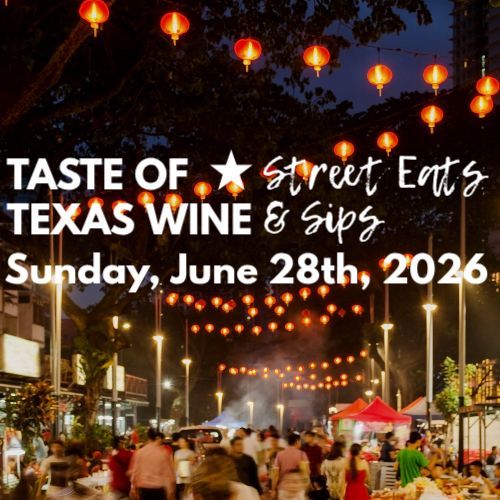
This Texas Wine Collective Taste of Texas: Street Eats and Sips, is scheduled on Sunday June 28th with one session at 1:00 pm. Wine Educator Carl Hudson will host this pairing of 3 favorite street foods accompanied by 5 wines and 1 cider from our TWC partners. While enjoying these delicious pairings there will be a discussion of the concept and history of street eats and various styles of street foods served from food carts, food trucks, traditional and non-traditional restaurants, and how they have served us over the years.
See the website for reservations and tickets: www.texaswinecollective.com.
Reservations and advanced ticket purchase are required for this event.
The July Taste of Texas: Between Two Buns & Beyond
Has been postponed due to scheduling conflicts.
We are working on an alternative date and will let you know ASAP.
The Taste of Texas: Twirl and Sip Pasta Favorites is still scheduled, Sunday, 23-August
The menu for this Street Eats and Sips event includes street food favorites prepared by Chef Marshall Lirette, TWC Culinary Director, supported by his crew. Chef Marshall operates the TWC on-site street eats vendor location, the Cork and Fork Food Truck. Chef Marshall and Becca Willingham Lirette, TWC Events Coordinator, helped in selecting the menu and wine pairings.
1st Chicken Tikka Masala Samosa paired with
McPherson Cellars Verdelho 2023 TX High Plains AVA
Brennan Vineyards Buffalo Roam Reserve 2023 TX High Plains AVA
2nd Mexican Steet Corn (Elote) paired with
Texas Keeper Grafter Blanc Cider
McPherson Cellars Carignan Block Selection 2021 TX High Plains AVA
3rd Funnel Cake paired with
Brennan Vineyards Lily White Blend 2024 Texas
McPherson Cellars Counoise 2023 TX High Plains AVA
First up on our menu today are Chicken Tikka Masala Samosas, a dish that combines two different cultural foods – Tikka Masala and Samosas. I will deal with each separately and then we’ll see how Chef Marshall puts them together for us today.
A samosa is a popular Indian deep-fried pastry with a savory filling, typically made of spiced potatoes, peas, sometimes meat or cheese, and there can even be sweet options with ingredients like fruit and chocolate. Samosas are usually made as a triangular or cone-shaped pastry filled with various ingredients and then deep fried. It is often served with chutneys such as mint or tamarind and can be made or served with a masala-like curry sauce. The samosa originated from the Middle East and later became very popular in both Central and South Asia. The name derives from the Persian word sambosag, translated to mean triangular pastry. There’s nothing quite like the aroma of spices swirling in the air as a batch of delicious, crispy, golden samosa pockets filled with flavorful ingredients are prepared.
Samosas are commonly served as snacks, appetizers, or street food. They pair well with green chutney, tamarind sauce, yogurt dips, or masala curry. They can be enjoyed either hot or at room temperature and are often part of festive meals or casual picnic-like gatherings. Samosas are celebrated for their crispy, flaky exterior and flavorful, spiced filling, making them a beloved snack across not only the Middle East, India, and South Asia, but in many culinary cultures around the world.
The second part of this dish, chicken tikka masala, is a curry consisting of roasted marinated chicken pieces (chicken tikka) in a creamy spiced sauce (masala). It is thought to have been created in Britain, possibly by a chef in Glasgow, Scotland. It is one of the most popular dishes in Britain and has been described as a true British national dish. Food scholars and critics have debated the status of the dish, concluding variously that it has undergone an elaborate process of cultural interchange, and serves as symbol of Britain's multicultural society. Arguments continue between several restaurants in Scotland and London as to the true inventor of the dish.
Chicken tikka masala is a brightly colored curry composed of boneless chunks of chicken marinated in yogurt and cream with spices (garam masala), roasted in an oven, and served in a creamy sauce, commonly comprised of tomato and coriander leaf, but there is no standard recipe. A 1998 British survey found that among 48 different recipes, the only truly common ingredients were chicken as the meat and tomato in the sauce. This survey also revealed that after Chinese stir fry, chicken tikka masala is the most popular ready meal sold in UK supermarkets. It can be served as an appetizer, a main course, often with rice or flatbread, and is found as a street food when less juicy ingredients are wrapped in flatbread. Interestingly, similar versions of this dish have become a popular street food in Mexico, wrapped in corn or flour tortillas.
Chef Marshall has taken the challenge to create chicken tikka masala samosas here in the TWC Fork and Cork Food Truck, giving the dish a bit of Texas flair. These samosas will be paired with a richly flavored white wine from McPherson Cellars and a fuller-bodied red blend from Brennan Vineyards.
McPherson Cellars Verdelho 2023 TX High Plains AVA
This 100% Verdelho was sourced from Texas High Plains vineyards near Brownfield in Terry County. Mechanically harvested fruit was directly pressed and fermented cool at 55oF for about 30 days; aged in SS tanks for about 8 months; bottled @ 12.5% ABV, 0.4% RS (essentially dry). Although Verdelho is often confused with the Verdejo white grape grown in Spain, this variety originated in sun-kissed vineyards of Madeira and Portugal. As one of only a few heat-loving white grapes, Verdelho is well adapted to hot, arid regions and is known for holding onto its natural acidity. This makes Verdelho a popular option for TEXAS winemakers, like Kim McPherson and Spenser Igo, that have incorporated this white grape variety into their portfolio. This wine has a radiant straw-yellow color with tropical fruit aromas and flavors like ripe citrus, tangerine, guava, and kiwi fruit. This leads to a crisp, refreshing finish that seems perfectly suited to summer-time sipping. Verdelho fits the McPherson focus on Mediterranean grape varieties and offers pleasant floral and herbal notes at the finish. Pair with chicken salad, grilled chicken or pork chops, cheese tortellini with yellow bell pepper cream sauce, a classic club sandwich with brown-sugar cured bacon, and, of course, samosas.
Brennan Vineyards Buffalo Roam Reserve 2023 TX High Plains
This Syrah 90% and Mourvèdre 10% blend was sourced from Texas High Plains vineyards (most likely Lahey Vineyards and/or Reddy Vineyards near Brownfield, TX, Terry County). Fruit was mechanically harvested, destemmed, crushed and separately fermented 9-10 days in SS tank at 60-85oF with overall 30-day skin contact. The cuvées were aged about 14 months in mostly used American and French oak barrels; blended and bottled @ 13.0% ABV, 0% RS (dry). Winemaker Griffin Ehlers continues the Buffalo Roam tradition with this rich and expressive blend. The base Syrah takes center stage with black fruit aromas and flavors (black cherry, black currant, black plum) plus hints of smoked meat and earthiness. The Mourvèdre provides depth and a dash of red fruit aromas and flavors (red plum, boysenberry, strawberry). Although this drinks well now, it has the complexity and structure to age another 2-5 years while gaining overall richness and adding savory and earthy characteristics. There are subtle notes of wood smoke, pipe tobacco, and five-spice on the bold, slightly rustic finish with good acid balance and moderate tannins. Pair with grilled or smoked meats, especially sausages, cream of mushroom soup, a thick, mustardy Reuben sandwich, and chicken tikka masala.
Some regional variations for Samosas include:
· In India, Hyderabadi samosas have a thinner crust and spicier filling, while Bengali shingaras are smaller, thicker-crusted versions with potatoes, vegetables, and nuts.
· In East Africa, samosas are called sambusas and may include chicken, beef, or seafood. In Portugal and Goa, they are known as chamuças and most often contain seafood.
· Modern twists may include various cheeses, different beans or lentil peas, sweet fillings like coconut, chocolate, khoya (an evaporated milk product), and paneer, a fresh, non-melting, acid-set cheese made from cow or buffalo milk widely used in South Asian cuisine.
Common ingredients in Chicken Tikka Masala Samosa recipes include chicken that has been prepared (basically marinated) in cream and yogurt, onions fried in oil with tomatoes, garlic, and ginger, as well as green chilies, nuts like cashews and almonds, chili powder, cilantro, mint, amchur (dried mango powder), and all manner of meats and seafoods. Garam masala spices used for this dish usually consist of some or most of the following ingredients: coriander, cumin, cardamom, cloves, black pepper, cinnamon, nutmeg, turmeric, saffron, fennel seeds, ginger, garlic, mustard seeds, mace, star anise, tamarind, bay leaves, and dried red chiles. (Simply Organic garam masala from HEB contains the underlined.)
Social scientists and food critics in Britian carried out a statistical survey of people's views of the role of chicken tikka masala in the UK. The survey organizers selected participants that lived in the UK and had eaten in British Indian restaurants. The conclusion was that the dish represents a fusion of British and Indian culinary traditions and serves as a symbol of multicultural exchange between the communities involved.
Many street foods either got their start along culinary midways of fairs and expositions and were first introduced to Americans at these fairs. For example, Cracker Jack, funnel cakes, corn dogs, kebabs, pita bread, cotton candy, apple fritters, fried dill pickles, chocolate covered bacon, waffle fries, waffle ice cream cones, dosas, Mediterranean gyros and chicken shawarma, crêpes, and Middle Eastern falafel have all been popular street eats at fairs and expositions.
Street food has been a cornerstone of urban life for thousands of years, typically sold by a vendor on a street or in a public place, such as a market, fair, or park. It is often sold from a portable food booth, food cart, or food truck and is usually meant for immediate consumption. Although some street foods remain regional in nature, many have spread beyond their region of origin to become almost universal.
Second on our menu today is the ever-popular Elote, or Mexican Steet Corn.
Q: What is elote and what is the difference between elote and esquites?
A: Elote is corn on the cob, while esquites are corn kernels removed from the cob. cooked in a broth and served in a bowl. Elote is typically eaten by holding the cob and biting into the kernels. Kernels can also be cut off the cob and eaten with a fork.
In Mexico, street corn is commonly referred to as “elote” (pronounced eh-loh-tay). This name is derived from the Nahuatl word “elotl,” which means “tender corncob.” The term “elote” is used throughout Mexico, although many regional variations exist.
We have previously featured corn eats in our Taste of Texas events, including tortillas and tamales.
The history of corn is very important and dates from over 9,000 years ago in MesoAmerican cultures. Corn (maize) was first domesticated in southern Mexico around 5,000 BCE, confirmed by archaeological evidence from Oaxaca. Indigenous civilizations in South America, such as the Aztecs and Mayans, revered corn as a sacred crop, using it in rituals, as a dietary staple, and in dishes like tortillas, tamales, and atole. They often roasted or grilled corn on the cob over open fires, seasoning it with salt, chili pepper, and lime juice.
In pre-Columbian times, corn was central to both nutrition and culture, symbolizing fertility and abundance. Spanish conquest in the 16th century introduced European ingredients and cooking methods, including cheese, dairy, and mayonnaise. These additions began to influence how corn was prepared.
The modern street corn style is believed to have originated in the central and southern regions of Mexico, where corn is abundant. Street vendors, called eloteros, began grilling corn on the cob and topping it with mayonnaise, cotija cheese, chili powder, and lime juice in the mid-20th century. This fusion of indigenous cooking traditions with colonial-era condiments created the rich, creamy, tangy, and spicy flavor profile we recognize today.
Mexican street corn exhibits a wide range of regional variations, reflecting the diverse culinary traditions of Mexico and Central and South America. Some of the most popular variations include:
Elote Asado: Roasted corn on the cob, typically seasoned with salt, lime juice, and chili powder.
Elote Loco: Crazy corn, topped with a variety of ingredients such as mayonnaise, cheese, bacon, and cilantro.
Elote En Vaso: Corn in a cup, served with a mixture of mayonnaise, cream, and cheese.
Esquites: Corn kernels removed from the cob and cooked in a broth with chili peppers, onions, and tomatoes.
Chef Marshall has prepared his street food version of elote which will be paired with a delicious, easy drinking apple cider made by Texas Keeper out of Manchaca, near Austin, and a rich red Rhône variety wine from McPherson Cellars.
Texas Keeper Grafter Blanc Cider N.V.
McPherson Cellars Carignan Block Selection 2021 TX High Plains AVA
This 100% Carignan is sourced from the Fulton Block of Lahey Vyds, Brownfield, TX, Terry County. Mechanically harvested fruit was destemmed, crushed, and fermented 9-10 days in SS tank with daily pump-overs. After fermentation, the wine was racked into French oak barrels (20% new) and aged 14 months before bottling @ 13.8% ABV, 0% RS (dry). Carignan is another classic Mediterranean grape variety that is handled well by winemakers Kim McPherson and Spenser Igo. It is predominantly grown along the southern French coast in the Languedoc and Roussillon regions. The Fulton Block represents the best fruit from that site and selective pruning for lower yields gave greater concentration from fewer, smaller clusters. What first comes out of the glass are aromas of raspberry fruit and soft, aged leather, followed by cranberry, coffee bean, and a hint of rosemary. Carignan’s thick skins add a touch of bitterness to accompany dark cherry and black currant fruit flavors. The wine has good balance with suede-like tannins made for pairing with food – elote, carnitas, roasted ham, smoked turkey or chicken, wood fired pizza, bacon wrapped pork tenderloins, and good ole Texas BBQ’d brisket.
Elote is more than a snack—it’s a symbol of Mexican street food culture. It’s sold by vendors from street carts, at markets, festivals, and outdoor events, and is enjoyed year-round. The dish reflects centuries of cultural exchange, blending MesoAmerican reverence for corn with European culinary influences. In summary, from sacred MesoAmerican staple to global street food favorite, elote’s history spans over 9,000 years, shaped by indigenous traditions, colonial influences, and the creativity of street vendors. It remains a vibrant example of how food can preserve a measure of cultural heritage while adapting to new tastes and techniques.
Funnel Cakes are a classic street food basically named for their method of preparation. Funnel cakes are made by pouring batter into hot cooking oil in a circular pattern and deep frying the overlapping mass until golden-brown. The batter is commonly poured through a funnel, creating its texture and providing the name. When made at concession stands, a pitcher with an integral funnel spout is typically employed. Alton Brown, chef, food writer, and TV host, recommends using choux pastry batter made from butter, water, flour, and eggs. The dough expands from steam produced by its water content. Funnel cakes are typically served plain with powdered sugar but can also be served with jam/jelly, cinnamon, chocolate, fresh fruit, honey, whipped cream, dulce de leche, and many other toppings.
Funnel cake probably got started In North America as a regional sweet street food popular with Pennsylvania Dutch immigrants who brought the dish to America in the 17th and 18th centuries. They developed a version using baking powder in the dough which made a softer, fluffier product. These were extremely popular in Pennsylvania Dutch Country and are considered one of the first North American fried foods. Today, it is a staple dish found at carnivals, amusement parks, and fairs – eventually spreading out to much of the rest of the country. The name "funnel cake" came later based on the preparation technique in which pancake-like batter is poured into hot oil through a funnel.
The concept of funnel cake traces back to the early medieval Persian and Arab world where zalabiyeh, a similar fried yeast-risen bread was first prepared and later spread to Europe. In south German cuisine, the equivalent fried dough preparation is called Strauben or Strieble. In Finland an analogous dish, literally called droplet bread, is traditionally served at May Day celebrations. In Lithuania and Armenia, the native name literally translates to "ant nest" and consists of lots of small droplets of fried dough. It is normally made in early spring to empty last year's honey stocks and make room for new honey coming in the summer and fall seasons. The traditional topping for "ant nest" is, of course, honey.
On the Indian subcontinent and in Middle Eastern countries, a similar fried dough concoction with a crystallized sugary exterior coating, is a popular dessert and street food. These differ from funnel cake in that no baking powder is used which results in a crunchy, somewhat heavier, chewier texture. A similar native doughnut in the Philippines is made with rice flour, duck eggs, and sugar where the dough is molded into rope-like strands and fried in a loose spiral. These have the taste and consistency of creamy pancakes.
So, Chef Marshall entertains us with his version of Funnel Cake which will be served with a creative white wine blend from Brennan Vineyards and a lighter-bodied red wine from McPherson Cellars.
Brennan Vineyards Lily White Blend 2024 Texas
This is an interesting multi-grape blend comprised of Viognier 37% and Semillon 36% from Newburg Vyds, Comanche County (10 miles south of the Brennan Winery), along with Albarino 14%, Pinot Gris 9%, and Picpoul Blanc 4% from Reddy Vyds located east of Brownfield in Terry County. Winemaker Griffin Ehlers must have had fun putting this blend together. Machine harvested fruit; directly pressed; separately fermented cool for 28 days; aged 6-8 months in SS tank; blended and bottled @ 13.9% ABV, 0% RS (dry). The appearance is sparklingly clear with pale straw hue. Aromas of honeydew melon, cantaloupe, and not-quite ripe pineapple rise from the glass. Fruit flavors echo the aromas with soft citrus, melon, pineapple, and ripe yellow stone fruits like peach and nectarine. The mouth-feel is bright and refreshing with notable acidity. Pair this with fruit and mascarpone trifle, a loaded charcuterie board, roasted chicken, grilled shrimp or fish, Mediterranean rice or pasta dishes, and fun snack foods like sopapillas and funnel cake.
McPherson Cellars Counoise 2023 TX High Plains
Counoise (koo-nwaz) is a lighter bodied red grape variety often used in blends and rosé wines, especially in France’s Rhône Valley. Kim McPherson and Spenser Igo have embraced Counoise as another Mediterranean variety added to their portfolio. The fruit for this 100% Counoise is sourced from Texas High Plains vineyards. It was mechanically harvested, destemmed, crushed, and fermented in SS tank at 60-85oF for about 10 days and left on the skins for an additional 15 days. The wine was aged 12 months in a mix of SS tank and used oak barrels before bottling @ 13.0% ABV, 0.2% RS (essentially dry). The medium-bodied palate offers aromas and flavors of cherry, raspberry, strawberry, and pomegranate with notes of dried mint, wild herbs, and a touch of terracotta earthiness. This fun wine pairs well with most lighter foods, especially seafood and poultry dishes, and also plays well with white or pink-sauced pasta and risotto dishes. Because of its lighter character and bright fruit aromas and flavors we think this will also accompany classic street food snacks like yeast shortbreads, pecan sandie cookies, and Chef Marshall’s funnel cake.
Street food has a long history, dating back to ancient civilizations. In Egypt, workers building the pyramids were sustained by street vendors selling bread and beer. In Greece and Rome, vendors catered to busy workers with fried fish and hot meals like fish stews with bread. Street food was widely consumed by poor urban residents of ancient Rome and other major European cities whose tenement houses often did not have ovens or hearths. Chickpea soup with bread and grain paste was a common meal.
A late 14th century traveler in Cairo noted that people sat on picnic blankets on the streets to eat meals of lamb kebabs, rice, and fritters purchased from street vendors. In South America, Aztec market vendors sold beverages and many types of tamales made with a wide range of ingredients: turkey, rabbit, gopher, frog and fish to fruits, eggs, and even insects. Spanish colonization brought European food ingredients like wheat, sugarcane and livestock to Peru which were eventually incorporated into street vendor fare. In Renaissance Turkey, many crossroads had vendors selling bites of spit roasted chicken or lamb to hungry travelers.
In the 19th century, street food vendors in Central Europe sold gingerbread nuts, fried bread, along with bacon and other meats cooked on top of ceramic vessels with hot coals inside. French fries most likely originated as a street food in Paris in the 1840s. Street foods in Victorian London included charcoaled beef and pork, pea soup, pea pods in butter, and prawns.
During the American Colonial period, street vendors sold oysters, roasted corn ears, fruit, and sweets at low prices to all classes. Many women of African descent made their living selling street foods in America in the 18th and 19th centuries, with products ranging from fresh fruit, nuts, cookies and cakes in Savannah, to coffee, biscuits, pralines and other sweets in New Orleans. And, of course, we want to remember the Chili Queens of San Antonio who sold bowls of chili with roasted meats, beans, and tortillas to travelers and urban workers. Street food vendors in New York City throughout much of its history are credited with helping support the city's rapid growth.
A bit more street food history - Street food in China has always been very important to the poorer citizens, although wealthy residents often send servants to buy street food and bring it back for their meals at home. Chinese street food continues to play a major role in culinary tourism for both domestic and international travelers.
Ramen was originally brought to Japan by Chinese immigrants in the late 19th century and was a popular street food for Chinese laborers and students. Ramen gradually became a "national dish" of Japan with many regional variations and has now become a popular street food internationally and a basic pantry staple worldwide.
In Delhi, India, it is said that kings used to visit kebab vendors on the street, which are still common and popular today. During colonial times, many variations brought to the country from various parts of the British empire were incorporated into street food kebabs.
Indonesia has had a vibrant street food culture for decades as massive urbanization has taken place. Vendors offer workers, students, and travelers such popular options as satay (chicken skewers), fried fritters, meatball soup, and vegetable salad served with peanut sauce.
Bangkok, Thailand has a reputation as one of the best places to sample street food. Popular offerings include Pad Thai (stir fried rice noodles), green papaya salad, curries, mango sticky rice, grilled bread with jam served with sweetened milk, and tom yum soup (a classic Thai hot and sour broth with fresh herbs and tender shrimp or chicken).
Falafel remains incredibly popular, especially in the Middle East. Vendors sell it on street corners in Palestine, Egypt, and Syria. Another common street food is a dish of slow-cooked fava beans.
In Germany and Denmark street food wagons offer options like sausages and hot dogs. Remember the wonderful Bratwurst sausages from Opa’s Smoked Meats we enjoyed at an earlier Taste of Texas: Bonus for Bratwurst (Sept-2024).
In Turkey, chicken shawarma is widely enjoyed in pita bread wraps served with toum (a creamy hummus-like garlic dip) and fresh vegetables.
In Jamaica grilled jerk chicken, seasoned with Scotch bonnet peppers, allspice berries, and garlic, is a traditional street food.
New York City's signature street food is WHAT? - the hot dog, but New York street food also includes a wide variety of internationally inspired options - Middle Eastern falafel, Jamaican jerk chicken, Belgian waffles, Pad Thai noodles, French fries, and many variations of funnel cakes.
In Hawaii, local street food can take on the look of a "plate lunch" that includes rice, macaroni salad, and a portion of meat. This style was inspired by the Japanese bento, a small take-out or home-packed meal packed in a lidded, often compartmented box. Such meals are common to most Asian culinary styles and were important to Japanese workers brought to Hawaii to work the plantations.
Netflix has featured street foods of the world through a TV series called Street Food, with episodes focusing on Asia, Latin America, major cities in North America, and maybe more, now. In many countries and regions in the U.S., food court centers or clusters of food stands have been developed to remove vendors from the streets while preserving this popular segment of our food culture.
Munch Food Park (https://munchpark.com), 303 E. Highway St., Fredericksburg, TX
We are pleased that Chef Marshall chose to highlight Street Eats and Sips for this Taste of Texas event. Hopefully y’all enjoyed the tasty foods and delicious TWC wines that focused on this important part of our culinary experience. While enjoying your favorite street foods, whether purchased from a vendor, in a restaurant, or prepared at home, please remember to enjoy Texas wines that support our Lone Star State grape growers and wine makers. And as always, Drink Well My Friends!